2 Week Emergency Food Supply List: Shopping List for 1 or 4 People
A real 2 week emergency food supply list built from supermarket food: quantities for one adult and a family of 4, a 14-day menu, and no-power cooking.
BLUF Bottom line up front
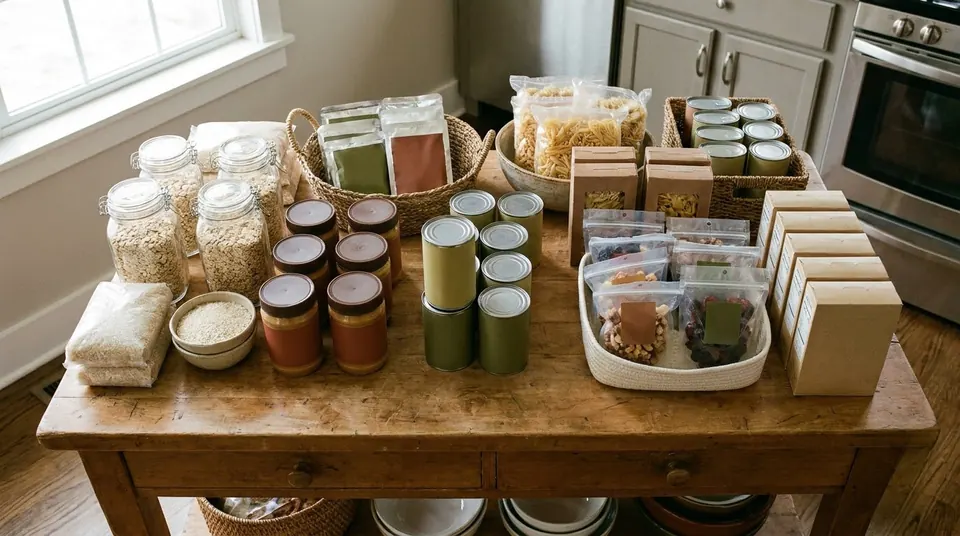
A 2 week emergency food supply for one adult is about 28,000 calories, based on the common 2,000 calories a day reference. In supermarket food that is roughly 4 lb rice, 3 lb pasta, 12 to 16 cans of protein and meals, peanut butter, oats, fruit, vegetables and snacks. Multiply for family members, and add 14 gallons of water each.
- Plan about 2,000 calories per adult per day, so 28,000 calories for 14 days.
- Build it from food you already eat. No buckets or kits required.
- Store at least 1 gallon of water per person per day, plus extra for cooking.
- Have a way to cook that works without power, used outdoors only.
- Check calories per serving on any pre-made kit before you buy.
This is a 2 week emergency food supply list you can buy at a normal grocery store. No buckets, no freeze-dried pouches, no special website. Just rice, pasta, cans, peanut butter and the things you already know how to cook.
Why two weeks? Ready.gov still says “several days” of supplies. But a growing number of state and local emergency agencies, including Wyoming’s, now say two weeks. A storm, an ice event or a supply disruption can run longer than three days, and stores empty fast.
The math is simple. One adult needs roughly 2,000 calories a day. That is the FDA’s standard reference number, not a personal prescription. Fourteen days is 28,000 calories.
The 2 week emergency food supply list for one adult
Quantities are approximate. Calories come from typical nutrition labels and vary by brand, so check yours. The total aims a bit above 28,000 to cover waste and bigger appetites in stress.
| Item | Quantity | Approx. calories |
|---|---|---|
| White rice, dry | 4 lb | 6,500 |
| Pasta, dry | 3 lb | 4,800 |
| Rolled oats | 1 large canister (42 oz) | 4,300 |
| Peanut butter | 1 jar (16 oz) plus 1 more if you like it | 2,800 to 5,600 |
| Canned beans | 6 cans | 2,200 |
| Canned chili or stew | 6 cans | 2,100 |
| Canned tuna or chicken | 10 cans | 1,200 |
| Canned fruit | 6 cans | 900 |
| Canned vegetables | 8 cans | 650 |
| Crackers | 2 boxes | 3,600 |
| Pasta sauce, jar | 2 jars | 400 |
| Honey or sugar | 1 small jar or bag | 1,000+ |
| Instant coffee or tea, salt, spices, cooking oil | small amounts | varies |
That adds up to roughly 30,000 calories. It is mostly shelf-stable food you can eat without refrigeration. For which cans are worth buying, see best canned foods for emergency storage. For the foods that sit longest on a shelf, see foods that never expire.
Family of 4
Multiply by four, with adjustments.
| Item | 1 adult | Family of 4 |
|---|---|---|
| White rice | 4 lb | 16 lb |
| Pasta | 3 lb | 12 lb |
| Rolled oats | 1 canister | 4 canisters |
| Peanut butter | 1 to 2 jars | 4 to 8 jars |
| Canned beans | 6 | 24 |
| Chili or stew | 6 | 24 |
| Tuna or chicken | 10 | 40 |
| Canned fruit | 6 | 24 |
| Canned vegetables | 8 | 32 |
| Crackers | 2 boxes | 8 boxes |
| Water (1 gal/person/day) | 14 gal | 56 gal |
Young children eat less than adults. Teenagers often eat more. Treat the multiplier as a safe ceiling and adjust to your actual household. To run your own numbers, use the emergency supply calculator.
Add the things nobody lists: a manual can opener (Ready.gov includes one in its kit list), plates or paper bowls, utensils, trash bags and dish soap.
A sample 14-day menu
You do not need to follow this. It exists to prove the list covers real meals.
| Days | Breakfast | Lunch | Dinner |
|---|---|---|---|
| 1 to 4 | Oatmeal with honey | Tuna and crackers, canned fruit | Chili over rice |
| 5 to 8 | Peanut butter on crackers | Beans and rice, canned vegetables | Pasta with sauce and canned chicken |
| 9 to 12 | Oatmeal with canned fruit | Canned chicken, crackers | Stew and rice |
| 13 to 14 | Peanut butter and honey | Tuna, vegetables | Pasta with sauce and beans |
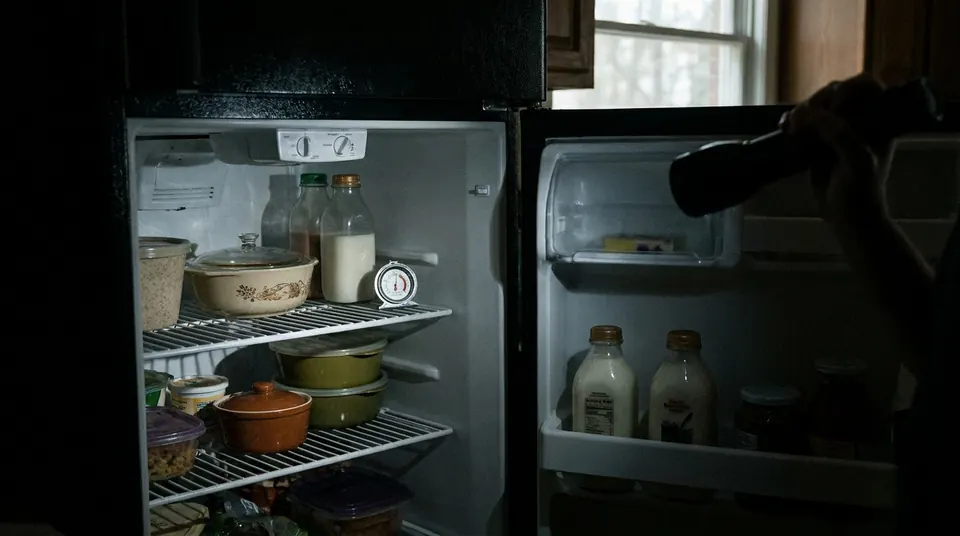
Eat the fridge and freezer food first, in the first days. After that, the pantry. How long food lasts in the fridge without power has the rules.
Water for drinking and for cooking
Ready.gov says one gallon per person per day for drinking and sanitation. For 14 days that is 14 gallons each. See how much water to store for containers and rotation.
Rice, pasta, beans and oats all need water to cook. As a rule of thumb, add several extra gallons for a household of four over two weeks, or favor foods that need little water: canned goods, peanut butter, crackers. Never use cooking water that is not safe. If you doubt your water, see how to make water safe to drink.
Cooking without power
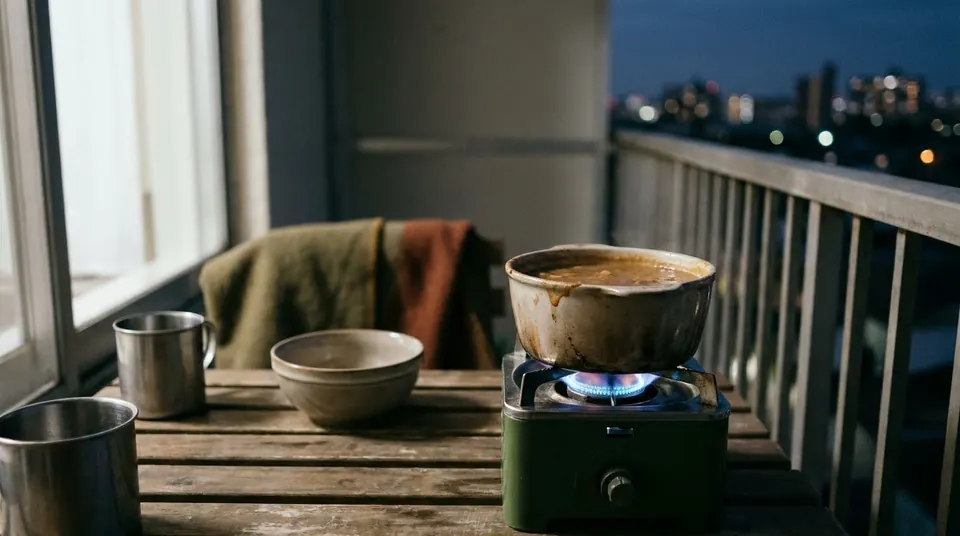
Safety: CDC says never use a portable gas camp stove indoors, never burn charcoal indoors, never use a generator inside your home or garage, and never heat your home with a gas oven. Cook outside, away from windows and doors.
Options, in order of simplicity:
- Eat cold. Canned food is already cooked. Cold chili is not glamorous but it works.
- Propane or butane camp stove, outdoors. Keep a few spare fuel canisters.
- Charcoal grill, outdoors. Keep charcoal dry and keep a lighter.
For other power basics, see the power outage checklist.
Special diets, babies and pets
- Babies. Ready.gov advises ready-to-feed formula where possible. If you must mix powder, use bottled or boiled water as a last resort. Keep jars of baby food and diapers.
- Allergies and intolerances. Swap the list. Gluten-free pasta, rice, nut-free spreads. Read every label.
- Diabetes. Keep the carbs-heavy items in check, stock glucose tablets, and talk to your doctor about an emergency plan and insulin storage. This is medical advice territory, so do not guess.
- Pets. Two weeks of their regular food, sealed, plus water. Do not change diets suddenly.
- Picky eaters. Buy comfort food. Ready.gov lists comfort foods for a reason.
Pre-made 2 week kits: worth it?
They are convenient and shelf-stable. They also vary a lot. Before buying, look for the number that matters: total calories divided by the number of days and people. If the label says “2 weeks for one person” and the calories do not come close to 28,000, it is a snack box with a good logo. Ask what you would eat on day 10, and whether it needs a lot of water. Kits are fine as a supplement. They are an expensive primary plan.
What to do this weekend
- Count your household and multiply the list.
- Check what you already have. Cross those items off.
- Buy rice, pasta and oats first. They are the cheapest calories.
- Buy 10 cans of protein and 12 cans of vegetables, beans and fruit.
- Buy peanut butter, crackers, honey, coffee or tea.
- Buy a manual can opener and a propane stove with spare fuel.
- Store 14 gallons of water per person.
- Add baby, pet and special-diet items.
- Write the date on every item.
- Rotate: eat the oldest first, replace as you go.
Frequently asked questions
How much food do I need for 2 weeks?
About 2,000 calories per adult per day, so 28,000 calories each. In groceries that is roughly 4 lb of rice, 3 lb of pasta, a canister of oats, peanut butter and 30 or so cans. The exact amount depends on appetite and age.
What is the cheapest 2 week emergency food supply?
Rice, dried or canned beans, pasta, oats and peanut butter. They give the most calories per dollar. Add canned vegetables and fruit for nutrition, and salt and spices so you can stand eating it.
How much does a 2 week supply cost?
It depends on your area and brands, so we cannot give a verified number. Rice, pasta, oats and beans are the cheapest base. Buy a little each week instead of everything at once, and compare unit prices.
Do I need a stove to eat?
No. Canned meat, beans, vegetables, fruit, peanut butter and crackers can all be eaten cold. A camp stove used outdoors just lets you cook rice and pasta and eat something hot.
How long does stored food last?
Cans keep best quality for 12 to 18 months (high-acid) or 2 to 5 years (low-acid). Rice and pasta keep much longer when sealed and cool. Rotate everything: eat the oldest items first.
Is 2 weeks enough?
For most short disasters, yes. It is a sensible first goal. After that, build toward a month. See prepping for beginners for the step-by-step.
Sources
This guide is general information, not professional, medical or legal advice. Follow instructions from local officials during an emergency. Full disclaimer.