What to Drink When There Is No Water: 10 Sources in Your House
What to drink when there is no water: the water heater, pipes, ice and more, ranked by safety, plus what never to drink and when to treat water first.
BLUF Bottom line up front
Start with the safest water already in your house: the water heater tank, water left in your pipes, and ice cubes. Then use sealed drinks like juice, milk and broth. Treat questionable water first. Never drink alcohol, seawater, pool water or waterbed water.
- Best home sources: water heater tank, pipes, ice cubes, and the clean toilet tank (only if no chemicals are in it).
- Turn off power or gas to the water heater before you open the drain.
- Drinks like juice, milk and broth help, but they are not water. Use them to stretch your supply.
- Do not drink toilet bowl, pool, waterbed, radiator or seawater.
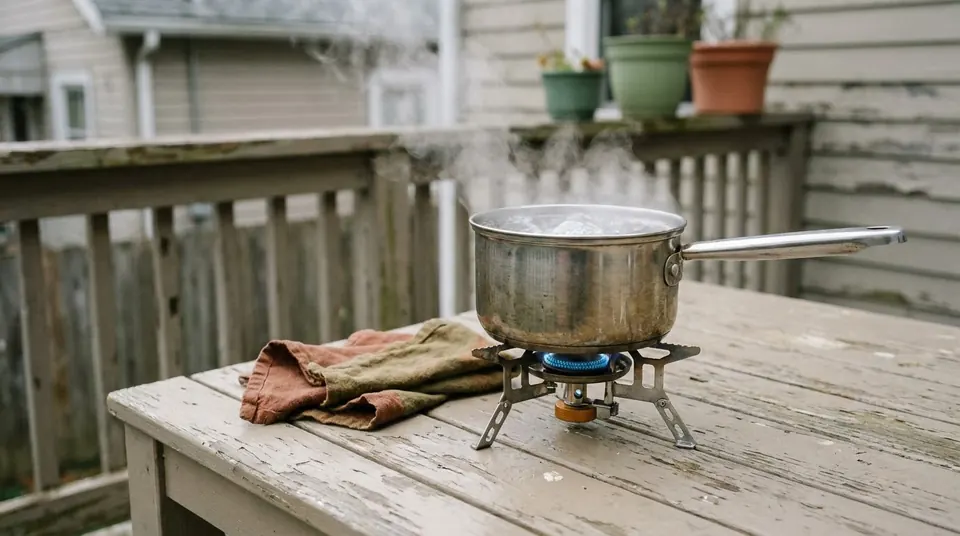
- Treat any doubtful water before drinking: boil it or use plain unscented bleach.
What to drink when there is no water coming out of the tap: first, the water already inside your house. A water heater tank holds a lot. So do your pipes, your ice trays, and your toilet’s flush tank if it is clean. After that come sealed drinks like juice and milk.
This is the order we would use, from safest to least safe. A few of these need treatment before you drink them. A few things people try never work, and one or two can make a bad day worse.
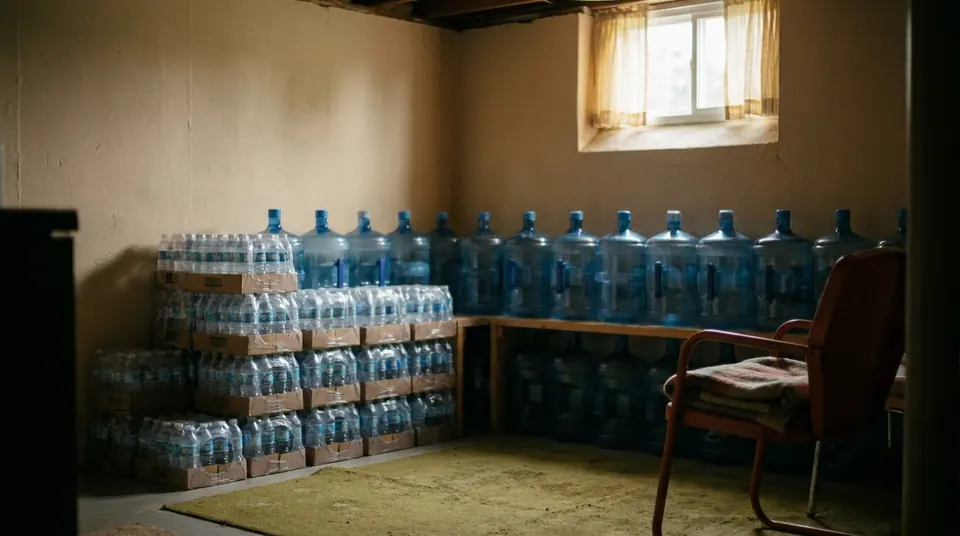
If you are reading this during an outage, skip to the list. If you are reading this ahead of time, the better fix is to store water in advance.
Before you start: the basics
Three ground rules.
- Do not ration water on your own. Ready.gov says to drink what you need today and look for more for tomorrow, unless authorities tell you otherwise.
- Treat questionable water. Water that has solids in it, an odor or a dark color should be avoided, per King County Public Health. If you are unsure about the source, run it through the steps in how to make water safe to drink.
- Do not replace water with soda, coffee or alcohol. Ready.gov says caffeine and alcohol dehydrate you.
Ranking below is our judgment from official guidance. Where a source has no official backing, we say so.
What to drink when there is no water: 10 sources, ranked
1. Water heater tank
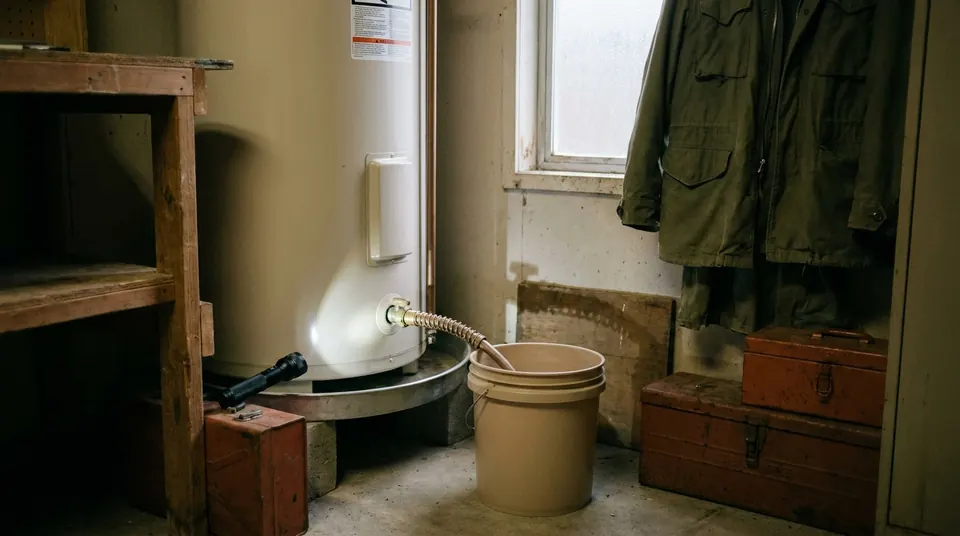
The best hidden supply in most homes. A tank water heater holds a good volume of water that was already in your plumbing. Check the label on your tank for its size.
How to get it out, per King County and Nebraska Extension:
- Turn off the electricity or the gas to the heater first. Do not skip this. Do not turn it back on until the water supply is restored and the tank is full again.
- Open the drain valve briefly to rinse the inside surfaces, then catch the water you want in clean containers (Nebraska Extension).
- Drain only what you need into a container (King County).
Your heater’s manual will show the exact valve and any extra steps for your model, so read it before an emergency, not during one.
Treat the water if you have any doubt about the supply. Sediment may be present. Strain it through a cloth or coffee filter.
2. Water in your pipes
Water stays in your plumbing after the supply stops. King County says to open a faucet at the top of the house, then open the faucet at the lowest point and let it drain into a container.
Do this early. Once the line empties, you will get nothing. Cover the water and treat it if a boil advisory is in effect.
3. Ice
Ice cubes in the freezer count. King County lists ice cube trays and says to use that water. Let them melt in clean containers.
If the power is out, ice from a full freezer melts into drinking water too, as long as it was made from drinking water. Keep it covered and clean as it melts.
4. Toilet tank (not the bowl)
This one is contested. King County says the reserve tank is usable if no chemicals have been put in it, and not usable if the water is blue. Nebraska Extension says to dip it out with a clean ladle and treat it. Another county guide, from Alameda County, says not to use toilet tank water at all.
Our rule: use it for flushing and washing first. Drink it only as a last resort, only if the tank has no cleaning tablets or tint, and only after boiling it. Never use the bowl.
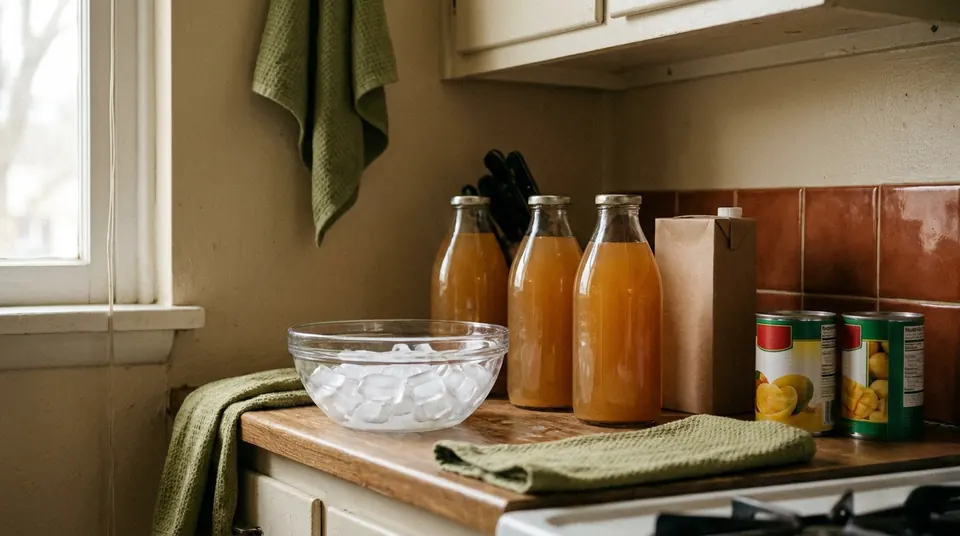
5. Canned fruit and vegetable liquid
The liquid in canned fruit, canned vegetables and beans is safe to drink if the can is sound. This is common sense, not a formal agency rule, and we found no official guidance specifically on it. Check the can: no bulges, leaks or deep dents. The liquid is salty or sugary, which means it does not replace plain water, but it counts toward fluid.
6. Juice
Shelf-stable juice is fine. It carries sugar, so it is not a full replacement for water. Dilute it if you want it to last longer. Use it alongside your water, not instead of it.
7. Milk and shelf-stable milk
Shelf-stable boxed milk keeps unopened without a fridge. Fresh milk is another matter. It spoils fast after the power goes. For fridge timing, see how long food lasts in the fridge without power. If the milk smells off, it goes down the drain.
8. Broth and soup
Broth is mostly water with salt. Canned or boxed broth works well in cold weather, and warm broth helps a person who is cold and tired. Salty soups can make you thirstier, so go easy if your supply is low.
9. Coconut water
It is mostly water with some potassium and sugar. It is fine as a bonus, but it is expensive and not a plan. If you already have it in the pantry, it counts.
10. Sports drinks and oral rehydration solutions
For someone who has been sick, with vomiting or diarrhea, oral rehydration salts (ORS) matter more than plain water. The WHO describes ORS as a mixture of clean water, salt and sugar. Packets are cheap and keep for a long time, so buy a few.
We are not giving a homemade recipe. The amounts we found in non-official sources differ from one another, and the WHO page does not list them. If you need to mix a rehydration drink, use packets and follow the package directions, or ask a clinician.
What not to drink
Some water-looking things are not drinking water.
- Toilet bowl water, radiator water, waterbeds, pools and spas. An Alameda County handout lists these as sources to avoid because of bacteria and chemicals. A City of Kearney page notes that some waterbeds contain toxic chemicals that many purifiers do not fully remove.
- Alcohol. Ready.gov says alcohol dehydrates you. Hard liquor does not count as a drink here.
- Seawater. It is salty enough to make dehydration worse. We have not cited a source for this one, but it is widely known and the logic is simple.
- Antifreeze, windshield washer fluid, or anything chemical. This should not need saying, and yet.
- Floodwater. CDC says you cannot make water that contains fuel, toxic chemicals or radioactive material safe by boiling or disinfecting it.
Rainwater, rivers, ponds and lakes are outside sources. King County says they may carry chemical or bacterial pollutants, and that boiling will not remove chemical ones. Treat them as a last resort, and filter and boil or disinfect them first.
Signs you are getting dehydrated
The WHO’s dehydration signs come from its diarrhoeal disease fact sheet. They are written for sick patients, but they are a useful list. Some dehydration: restlessness or irritability, sunken eyes, thirst, and drinking eagerly. Severe dehydration: lethargy or unconsciousness, sunken eyes, being unable to drink, and skin that goes back slowly when pinched.
If anyone is lethargic, cannot drink, or is confused, that is a medical situation. Get help. Do not try to tough it out at home.
Children, older adults and anyone who is pregnant or sick can get into trouble faster. Ready.gov says they may need more water than the one-gallon baseline.
Stretching a small supply
Some practical points, not official numbers:
- Drink small amounts often rather than a lot at once.
- Stay in the shade or cool part of the house. Sweat costs water.
- Cut down on salty food. Eat foods with moisture in them.
- Keep exertion low. This is not the day to rearrange the garage.
A weekend plan
- Find out where your water heater’s drain valve is. Locate the shutoff for gas or power. Write it on a card.
- Find the cold water inlet valve so you can close it.
- Fill a few ice trays and bags and leave them in the freezer.
- Buy two or three ORS packets for the first-aid kit.
- Read prepping for beginners to see where water sits in the larger plan.
Frequently asked questions
Can you drink the water in a water heater?
Yes, in an emergency, if the heater is a tank type and has been off. Turn off the power or gas first, drain the water through the bottom valve into clean containers, and strain it. King County and Nebraska Extension both describe this. Treat it if you are unsure of the supply.
Is toilet tank water safe to drink?
It is a last resort. King County says it can be used if no chemicals were added and it is not blue. Nebraska Extension says to dip it out with a clean ladle and treat it. Alameda County says not to use it. Never drink from the toilet bowl.
What can I drink if I have no water at all?
Water from the water heater, pipes and ice first. After that, shelf-stable juice, milk and broth, and the liquid from canned goods. These help, but they are not full replacements for water, so find a real source as soon as you can.
Can you drink pool water in an emergency?
No. Pool and spa water is on the Alameda County list of sources to avoid because of bacteria and chemicals. Use it for flushing a toilet or washing, not for drinking.
Does sports drink count as water?
It counts as fluid. Ready.gov says not to substitute caffeinated drinks for water, and a sports drink is sugary, but without caffeine it helps. If someone has vomiting or diarrhea, oral rehydration salts are the better choice.
Sources
This guide is general information, not professional, medical or legal advice. Follow instructions from local officials during an emergency. Full disclaimer.