How to Deter Burglars: 17 Boring Habits That Work
How to deter burglars from your home: what 422 convicted burglars told researchers, 17 plain habits that make a house a worse target, and blackout tips.
BLUF Bottom line up front
To deter burglars, make your home slower, louder and more visible than the next one. Lock every door and window, reinforce door frames with 3-inch screws, keep lights and a car-in-the-driveway look of occupancy, trim shrubs, and add an alarm or cameras. Burglars mostly want easy, unobserved targets.
- In a UNC Charlotte survey of 422 convicted burglars, about 83% said they would check for an alarm and about 60% would pick another target if they found one.
- Most burglars get in through open or forced doors and windows. Locking up is the cheapest fix.
- The weak point on most doors is the strike plate. Replace the short screws with 3-inch screws.
- Looking occupied beats looking expensive. Vary your lights and keep mail and trash from piling up.
- In a blackout, do not announce what you have. Call 911 if you see something, and do not confront anyone.
If you want to know how to deter burglars, start with how they think. They are not criminal masterminds. They want a quick, quiet entry into a place nobody is watching, and they want to be gone in minutes.
That is good news. Most of what stops them is cheap, dull and takes an afternoon: locks that are actually locked, lights that look lived-in, doors that do not fold when kicked, and neighbors who notice things.
This guide covers what research says burglars look at, 17 habits that make your house a worse target, and what changes during a long outage, when the whole street goes dark.
What burglars actually look for
The best study we have comes from the University of North Carolina at Charlotte. Researchers surveyed 422 incarcerated burglars in North Carolina, Kentucky and Ohio. A fair caveat: the work was funded by an alarm industry research foundation. The findings are still the best direct evidence from offenders themselves.
Here is what they reported:
- About 83% said they would try to find out whether an alarm was present before a burglary.
- About 60% said they would look for a different target if there was an alarm on site.
- Of those who triggered an alarm mid-burglary, about half said they would stop, 31% would sometimes retreat, and only 13% would always carry on.
- Many weighed the closeness of other people (neighbors, passers-by, people at home) when picking a target. Alarm signs, dogs inside and outdoor cameras also factored in.
- Most got in through open points of entry or by forcing windows and doors. About one in eight picked locks or used a key they had obtained.
Notice what is missing. Nobody picked houses because they were rich. They picked houses that looked easy and unwatched.
How common is it?
Burglary is falling. The FBI’s 2023 data showed burglary down an estimated 7.6% from the year before. It is still worth the effort. A break-in is a violation of your home, and the cleanup is a headache even when little is taken.
How to deter burglars: 17 habits that work
Close the easy doors
1. Lock everything, every time. The research says most burglars use doors and windows that are open or easy to force. Lock the back door when you are in the garden. Lock windows on the ground floor. Lock the car, even in the garage: police point out burglars look for keys and valuables in vehicles.
2. Use a real deadbolt. Baltimore police advise a deadbolt on every exterior door, because a knob lock alone is not enough. St. Petersburg police suggest a Grade 1 or 2 lock with a one-inch throw.
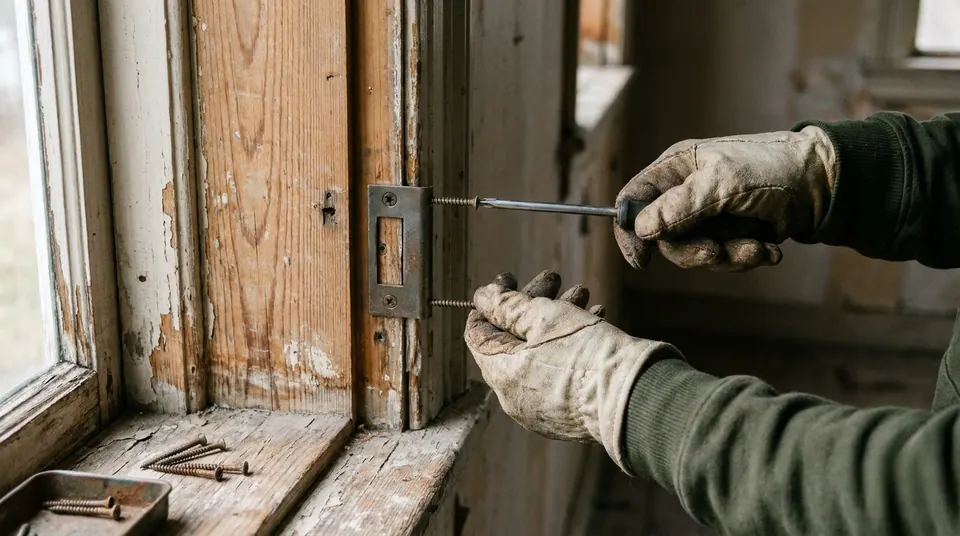
3. Fix the strike plate. Seattle police say kicking is the most common forced-entry method and that the strike plate is usually the failure point. Factory screws are short and bite only into the thin door jamb. Replace them with a four-screw strike plate and 3-inch screws that reach the wall stud, as St. Petersburg police suggest. Do the hinge screws too. It costs about $10 to $20 (approximate) and takes half an hour.
4. Check the door itself. Exterior doors should be solid-core or metal. A hollow door with a great lock is still a hollow door.
5. Block sliding doors. A dowel or a bar in the track stops the door from being slid open. Baltimore police recommend a broomstick in the track. Anti-lift pins stop the door from being lifted off its rail.
6. Do not leave windows open wide. If you need air, St. Petersburg police say to open windows no more than 6 inches and add a blocking device so no one can reach in to remove it.
7. Treat the garage as a front door. St. Petersburg police call it often the weakest point of entry. Keep the door closed and the car inside it locked.
Look occupied and watched
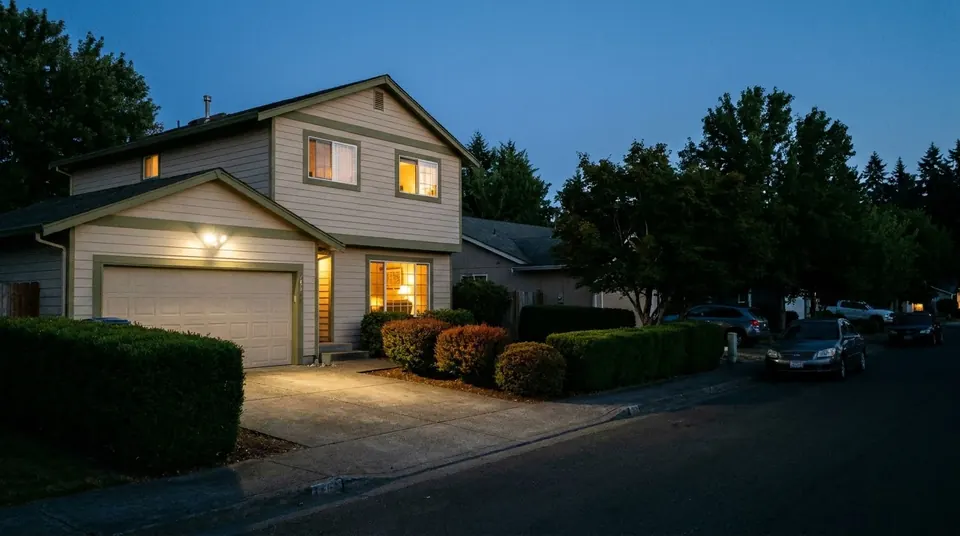
8. Put interior lights on timers. St. Petersburg police advise using them every day, even when you are home, and varying the pattern. Place timers near front and back windows with curtains closed. A radio or TV on a timer adds sound.
9. Light the outside. Police guidance suggests outdoor lighting bright enough to see about 100 feet, plus motion-sensor lights at the rear. A porch light left on all day tells everyone you are away.
10. Trim the shrubs. Baltimore police advise trimming trees and bushes back from windows and doors so they cannot hide an intruder. A burglar wants cover. Give him none.
11. Add an alarm, cameras and signs. This is the strongest finding in the UNC study. Even a simple setup signals risk. Alarm decals and “beware of dog” signs may deter, per Baltimore police. Visible beats hidden for deterrence. Do not fake a camera that obviously is not working: it fools nobody.
12. Keep the place looking lived-in when you are away. Ask a neighbor to collect mail and newspapers, and to park in your driveway now and then. St. Petersburg police list both. Have snow cleared or the lawn mown.
Do the dull stuff
13. Do not hide a spare key outside. Planters, doormats and ledges are the first places burglars check, according to police. Give a spare to a trusted neighbor.
14. Know your neighbors. Closeness of other people was a deterrent in the UNC study. Get to know the people on both sides and across the street. Agree to watch each other’s homes. St. Petersburg police go further and suggest starting a neighborhood watch through your local crime prevention unit.
15. Put valuables in a safe. Police say burglars mostly target small, easy-to-sell items: cash, jewelry, guns, watches, laptops. Anchor a safe to the floor or framing, and keep a written record of serial numbers (Baltimore police).
16. Do not advertise what you own. This one is common-sense advice rather than something the studies above measured. A big new TV box at the curb or a social media post about your trip tells strangers something. Break boxes down and put them in the bin inside.
17. Consider a dog. The UNC study lists dogs inside a building among the things burglars weigh up. No percentage was reported, so do not buy a dog for this reason alone. If you already have one, a bark at the door is a free alarm.
How to make your house look occupied
A short checklist for trips or long days out.
- Two or three timer lamps on different schedules
- Radio or TV on a timer
- Mail and packages collected by someone
- A car in the driveway, or a neighbor parking there
- Lawn mown or snow cleared
- Curtains in a normal state, not drawn for a week
- A neighbor who knows you are away and has your number
Home security during a power outage
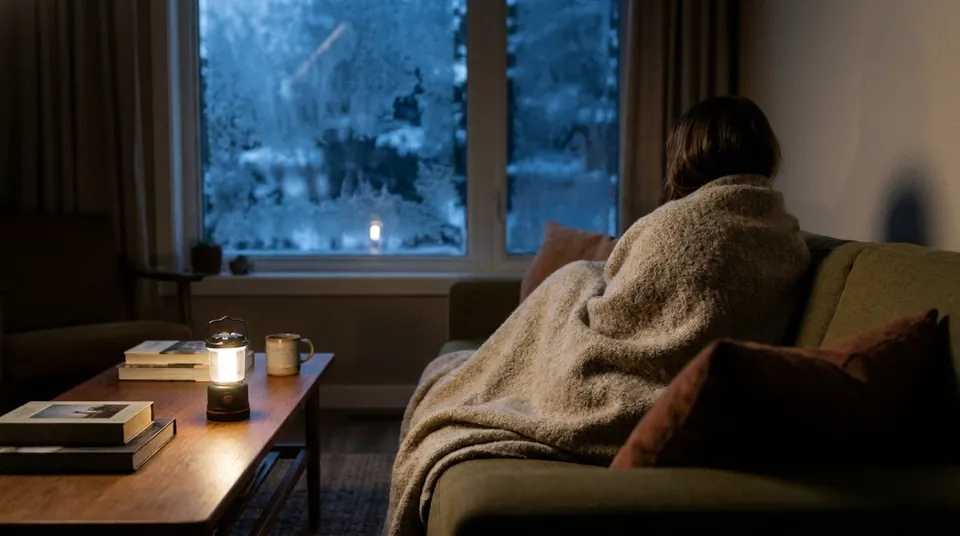
Everything above gets harder when the grid fails. Alarms may go quiet, cameras may drop, and the timers and motion lights stop. Two things change.
Your alarm may not work
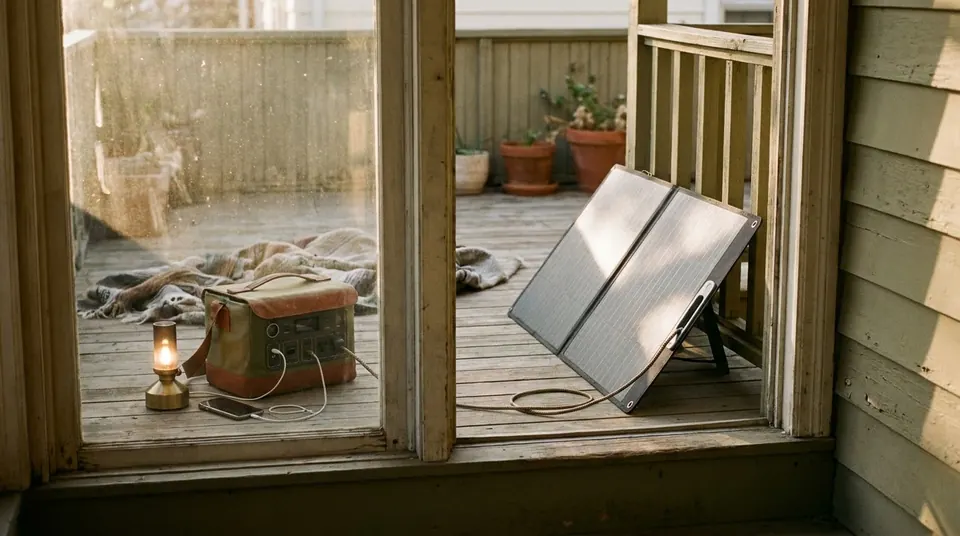
Many alarm panels and cameras have battery backup, but only for hours, and Wi-Fi cameras die when the router does. Check yours now: how long does it run on battery, and what happens when the router is down? A power outage checklist should include this. Battery or solar motion lights are a cheap workaround, and a small power source can keep a router going. See off-grid power options.
Light and noise advertise you
On a dark street, the one house with bright windows and a roaring generator stands out. That draws attention. Two sensible habits, offered as judgment rather than research:
- Use curtains at night. If you are the only lit house, close blinds so lamplight is not a beacon.
- Do not broadcast supplies. Do not tell the whole street about your generator or stockpile. Quietly share with close neighbors you trust instead.
And a hard rule: generators run outdoors, at least 20 feet from doors, windows and vents, per the CDC. Never bring one inside to protect it from theft. That is how people die. If theft is a worry, secure it outdoors with a lock and chain.
Lean on the neighborhood
An outage is when neighbors matter most. Check in on the people near you, especially older ones. Agree on who has a spare light or a radio. A street that is looking out for itself is a poor target. For the wider preparedness picture, our prepping for beginners plan includes a household and neighbor plan.
If you think someone is breaking in
Keep it simple and boring.
- Call 911 for suspicious activity, as Baltimore police ask.
- Do not confront anyone. Possessions can be replaced.
- If someone is inside, leave the house if you can do so safely and call from outside.
- Self-defense laws vary by state. If you are considering anything beyond calling the police, learn your local law first. This article does not cover it.
What to do this weekend
- Fix the strike plate on your front door with 3-inch screws.
- Put two lamps on timers and set them to different times.
- Walk the outside of your house and trim anything that hides a window or door.
- Check every door and ground-floor window latch.
- Find out what your alarm and cameras do when the power or Wi-Fi is down.
- Introduce yourself to one neighbor you have never talked to.
Frequently asked questions
What do burglars hate the most?
Alarms, cameras, noise and people nearby. In the UNC Charlotte survey, about 60% of burglars said they would pick another target if an alarm was on site, and many considered how close other people were. Burglars want quiet, unobserved, fast.
Do burglars really check for alarms?
Many do. About 83% of the surveyed burglars said they would try to find out whether an alarm was present before an attempt. The study was funded by an alarm industry group, so weigh it with that in mind, but the finding matches police advice.
What is the most common way burglars get in?
Through open or forced doors and windows. The UNC study found most burglars entered via open entry points or by forcing windows and doors. Police point to kicked-in doors as the most common forced entry, and the strike plate as the usual failure point.
Do outdoor lights deter burglars?
They help, as part of the picture. Police guidance recommends outdoor lighting bright enough to see about 100 feet, plus motion lights at the rear. Light removes the cover burglars want. It works best with locked doors and neighbors who can see your house.
How do I make my house look occupied when I am away?
Use interior timers on varied schedules, ask a neighbor to collect mail and park in your driveway, and keep the lawn or snow clear. Do not leave a porch light on all day, which signals that nobody is home.
Is a fake security camera worth it?
Not much. A visible real system is a stronger deterrent, because alarms and cameras were weighed by a majority of burglars in the UNC study. A fake that is clearly dead may be spotted. If budget is the issue, spend it on locks and lighting first.
Sources
- UNC Charlotte: Through the eyes of a burglar (study summary)
- St. Petersburg Police: Residential Burglary Prevention
- Baltimore Police Department: Burglary Prevention Tips
- Seattle Police: Home Security, Door Security
- NBC New York: FBI 2023 crime data (burglary down 7.6%)
- CDC: Prevent Carbon Monoxide Poisoning
This guide is general information, not professional, medical or legal advice. Follow instructions from local officials during an emergency. Full disclaimer.