Off-Grid Power Options for a Normal House
Off grid power options for a normal house, from power banks to standby generators. Watt-hour math, rough costs, runtimes and the safety rules that matter.
BLUF Bottom line up front
For a normal house, the practical off grid power options are, in order of cost: power banks, a portable power station, solar panels added to that station, a portable generator, a standby generator, and a home battery with solar. Match the option to what you must keep running, usually the fridge, lights and phones.
- Start with watt-hours. Add up what you must run and for how long, then buy to that number.
- A fridge uses roughly 1 to 2 kWh a day. Most whole houses use far more.
- Portable power stations are silent and indoor-safe. Generators are cheaper per kWh but make carbon monoxide.
- Run generators outdoors, 20+ feet from doors, windows and vents. Never plug one into a wall outlet.
- Grid-tied solar panels alone usually shut off in an outage. You need a battery and the right inverter.
Most people who search for off grid power options do not want to live in a cabin. They want the fridge to keep running when the storm takes out the line, and their phones to charge, and one light in each room.
That is a much smaller problem than “off grid.” It is also very solvable. The trick is to work out how much energy you actually need, then pick the cheapest tool that delivers it safely.
This guide is a ladder. Start at the bottom rung. Climb only as high as your outages and your budget justify.
Start with the math: watts and watt-hours
Two numbers decide everything.
- Watts (W) is how hard a device pulls at one moment.
- Watt-hours (Wh) is how much energy it uses over time. Watts multiplied by hours.
A 60 W device running for 5 hours uses 300 Wh. A battery rated 1,000 Wh can supply that for a bit over three such sessions, before losses.
There is a third number that trips people up: starting surge. Motors, like the compressor in a fridge, pull several times their running watts for a moment when they start. One generator-sizing guide from a vendor lists a refrigerator at roughly 700 running watts and 2,200 starting watts. Treat those as typical, not exact. Your fridge nameplate or EnergyGuide label has the real numbers.
What a normal house uses
The U.S. Energy Information Administration says the average American household uses about 10,500 kWh a year. That works out to about 29 kWh a day (our arithmetic). Powering all of it off-grid is expensive, and nobody needs to in an outage.
A refrigerator is the useful benchmark. An Oak Ridge National Laboratory study of a refrigerator sample found a median of 651 kWh a year, with a mean of 756. Divide by 365 and you get roughly 1.8 to 2 kWh a day. Newer, efficient models use less. As a rule of thumb, plan for 1 to 2 kWh a day for a fridge.
Here is a sample “essentials only” list. The wattages are rough rules of thumb, so check your own labels.
| Item | Typical running watts | Hours per day | Approx. Wh per day |
|---|---|---|---|
| Fridge (compressor cycles on and off) | 40 to 85 W average over the day | 24 | 1,000 to 2,000 |
| LED lights, 6 bulbs | 60 W total | 5 | 300 |
| Phone charging, 2 phones | 20 W | 3 | 60 |
| Wi-Fi router and modem | 15 W | 24 | 360 |
| Laptop | 50 W | 4 | 200 |
| CPAP (without humidifier) | 30 to 60 W | 8 | 240 to 480 |
Add those up and you land near 2 to 3.5 kWh a day. That is the sort of load a power station plus solar can handle, or a small generator that runs a few hours a day.
Note: Anything with a heating element is an energy hog: space heaters, electric kettles, electric stoves, hair dryers, dryers. Do not plan on running them from batteries. For heat, see how to stay warm without power.
The ladder of off-grid power options
1. USB power banks and small batteries
The entry level. A power bank charges phones and runs small USB gear like lanterns and radios. Typical banks hold 10 to 30 Wh per 3,000 to 10,000 mAh of capacity, roughly. A larger one stores 100 Wh or more.
- Cost: about $15 to $100 (approximate).
- Runs: phones, headlamps, radios, small fans.
- Doesn’t run: anything with a plug.
Buy two or three, charge them every few months, and put them in the same drawer as your flashlights. This is the cheapest rung and the first thing on any power outage checklist.
2. Portable power stations
A power station is a big battery with an inverter and standard outlets in one box. They are quiet, produce no exhaust and can run indoors. Many now use lithium iron phosphate (LiFePO4) cells, which have a longer cycle life than older lithium types. Check the spec sheet for the claimed cycle count of any model you consider.
Capacity is quoted in Wh. Roughly:
- 250 to 500 Wh: phones, laptops, lights, CPAP for a night.
- 1,000 to 2,000 Wh: the fridge for part of a day, plus the small stuff.
- 3,000 Wh and up: heavy, expensive, but can bridge a fridge for a day or more.
Not all of that capacity is usable. Inverters waste some. A rule of thumb is to count on 80 to 90 percent of the label. A 1,000 Wh unit running a fridge that averages 60 W (about 1.5 kWh a day) lasts roughly 14 to 16 hours.
- Cost: very roughly $200 for a small unit up to $3,000 or more for a large one (approximate, varies with brand and sales).
- Noise: near silent, apart from a fan.
- Safety: no carbon monoxide. Do not charge or store in extreme heat.
- Weakness: it runs out. Recharging a big one from a wall takes hours, and during an outage you have no wall.
3. Solar panels plus a power station
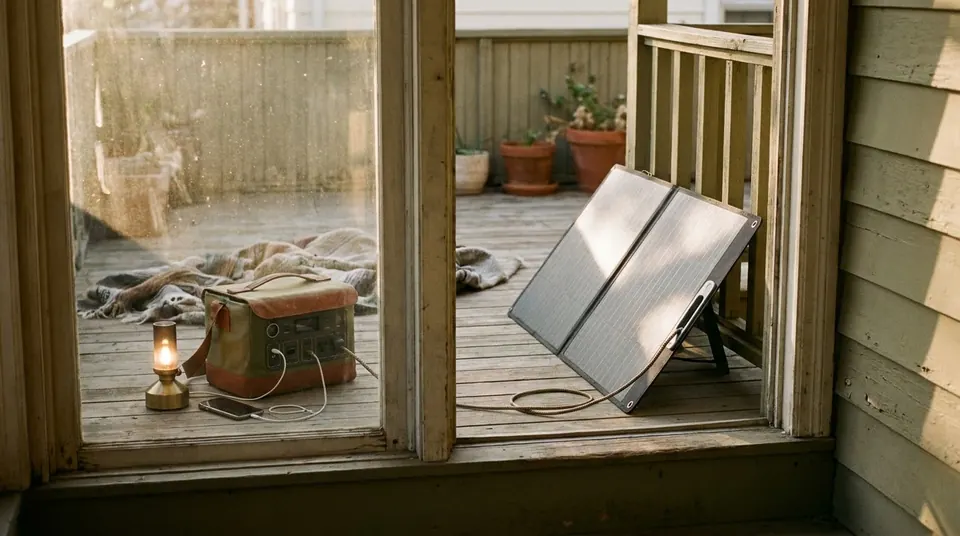
This pairs a power station with portable or fixed panels. It turns “runs out” into “recharges daily.”
The math is rule-of-thumb stuff. Count about 4 peak sun hours on a decent day (varies a lot by season, latitude and weather). A 400 W panel array can give 1,600 Wh in theory. In practice you get less because of angle, heat and cloud, so plan on around 1,000 to 1,300 Wh from 400 W on a good day.
That is enough to cover phones, lights, a router and a laptop. It will not cover a full fridge day on its own.
- Cost: panels run perhaps $1 to $2 per watt for folding portable ones (approximate). Add the power station.
- Weakness: winter, cloudy weeks and shade. Solar is a top-up, not a guarantee.
4. Portable generators
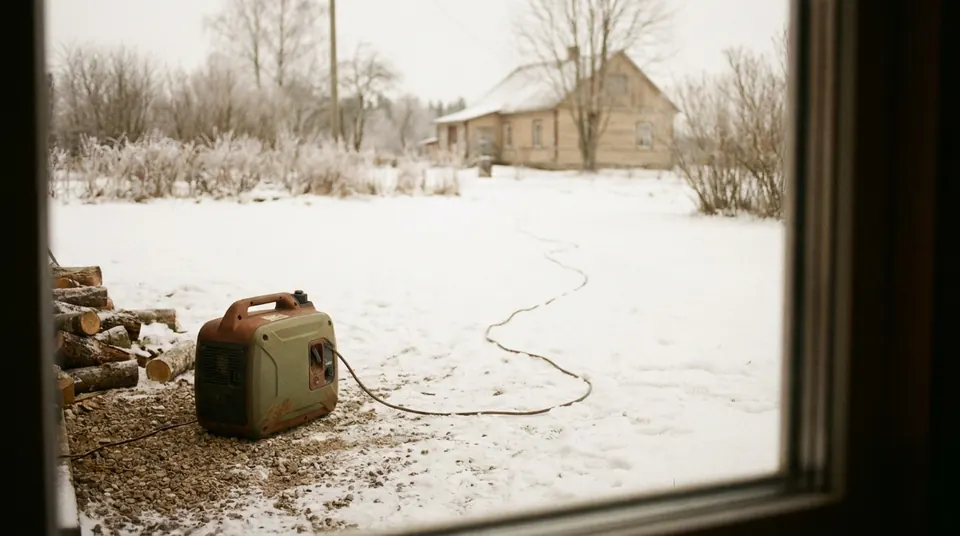
A portable generator is the cheapest way to get lots of power for a few days. It is also the dangerous one. Read the safety section below before you buy.
There are two main kinds.
| Type | Typical output | Pros | Cons |
|---|---|---|---|
| Conventional open-frame | 3,500 to 10,000 W | Cheap per watt, high output | Loud, thirsty, dirtier power |
| Inverter generator | 1,000 to 4,500 W | Quieter, better fuel economy, cleaner power for electronics | More cost per watt, lower output |
The inverter-versus-conventional comparison is a widely repeated rule of thumb. Check the decibel rating and runtime on the spec sheet of any model you buy.
Dual-fuel models run on gasoline or propane. Propane stores almost indefinitely, which helps. Gasoline goes stale in months unless treated.
- Cost: about $400 to $1,500 for a typical inverter or small open-frame unit, more for larger ones (approximate).
- Runs: fridge, freezer, lights, router, a window AC or furnace blower, depending on size.
- Needs: fuel, an outdoor spot, a heavy-duty outdoor-rated cord or a transfer switch.
5. Standby generators
A standby generator is bolted outside the house like an AC condenser, wired in through an automatic transfer switch and fed by natural gas or propane. When the power drops, it starts itself.
You need a licensed electrician and usually a permit and inspection. Costs depend on size, gas line work and your area.
- Cost: commonly quoted in the range of $5,000 to $15,000 installed, but treat that as approximate and get quotes.
- Runs: anything on the circuits it is connected to, sized to the unit.
- Weakness: it needs fuel supply. It also needs maintenance. It still makes carbon monoxide, so the placement rules still apply.
If your area gets outages measured in days, or someone in the house depends on powered medical gear, this is the option that stops being a luxury.
6. Home battery plus solar
This is the quiet end of the ladder. Rooftop solar feeds a battery, and the battery runs the house through an outage. Tesla’s Powerwall 3, for example, is listed on its datasheet at 13.5 kWh of nominal energy. By our arithmetic that is several days of fridge and lights, or roughly half a day of an average whole house.
There is a catch many solar owners discover too late. A standard grid-tied solar system shuts down when the grid goes down. The inverter is designed to disconnect, partly to protect utility crews working on the lines. This is explained in plain terms by a solar equipment retailer here. To keep running, you need a battery and an inverter set up for backup operation. Ask your installer exactly what the system does in an outage before you pay.
- Cost: commonly many thousands to tens of thousands of dollars installed (approximate, depends on size and incentives).
- Strength: silent, no fuel, and it saves money the other 360 days a year.
- Weakness: price and long payback.
7. Small off-grid gadgets
Cheap and often better than they sound:
- Solar lanterns and headlamps. A few dollars each. They replace candles, which are a fire hazard.
- Hand-crank or battery radio. For weather alerts and news.
- Propane camp stove or charcoal grill. Outdoors only. Never indoors, never in a garage.
- A cooler and block ice. Not electrical, but it saves more food than a small battery does. See how long food lasts in the fridge without power.
- A hand pump or gravity filter for water, if you are on a well.
Comparing the options
| Option | Rough cost (approx.) | What it runs | Runtime | Noise | Main risk |
|---|---|---|---|---|---|
| Power bank | $15 to $100 | Phones, lights | Hours to days for phones | None | Dies unrecharged |
| Power station | $200 to $3,000+ | Fridge for hours, small gear | Hours to 1 day | Near silent | Runs flat, heat |
| Power station + solar | $500 to $4,000+ | Small essentials daily | Indefinite on sunny days | Silent | Weather |
| Portable generator | $400 to $1,500+ | Fridge, lights, more | As long as fuel lasts | Loud to moderate | Carbon monoxide, backfeed |
| Standby generator | $5,000 to $15,000 | Selected or whole-house circuits | As long as gas lasts | Moderate | Carbon monoxide, upkeep |
| Home battery + solar | Many thousands | Selected or whole-house | Hours to days | Silent | Cost, system setup |
Portable power station vs generator
This is the question behind half the searches about off grid power, and the honest answer is: it depends on the load. If your worry is a cold house rather than a warm fridge, start with heat instead.
Pick a power station if you want to run a fridge for a night, charge devices, keep a CPAP going and avoid fuel and fumes. It is also the only one of the two you can safely use in an apartment.
Pick a generator if your outages run longer than a day, or you need to run bigger loads like a well pump, furnace blower or window AC. You trade convenience and safety for power and endurance.
Many households do both. A station for the first night and the quiet stuff, a generator for the long haul.
The safety rules that are not optional
Carbon monoxide from portable generators kills people every year. The U.S. Consumer Product Safety Commission estimates about 85 people die each year in the U.S. from CO caused by gasoline-powered portable generators. Many of them were running a generator for a fridge or heat.
Safety: Run generators and any gas-powered equipment outdoors, at least 20 feet from doors, windows and vents, per the CDC. NFPA agrees: measure the 20 feet from the generator to the building. Never run a generator in a garage, even with the door open.
The rest of the list:
- Battery-operated CO alarms. Install them near sleeping areas and on every level. Test them before you run a generator.
- Never plug a generator into a wall outlet. This creates backfeed, which can energize utility lines and endanger line workers. A utility flyer lays out the path in plain terms. Use heavy-duty outdoor-rated cords from the generator to your appliances.
- Connecting to house wiring needs a transfer switch. NFPA says to have a qualified electrician install a properly rated one. An interlock kit is another option some electricians use. Ask your electrician and your utility.
- Let it cool before refueling. Fuel spilled on a hot engine can ignite. Store fuel in a labelled container made for it, outside living areas (NFPA).
- Never run it in a closed shed or enclosed space. Exhaust has to blow away freely.
Ready.gov gives the same core advice: generators outdoors, at least 20 feet from windows, doors and attached garages, and detectors installed on every level.
How to pick: a simple decision path
- List what you must run. Fridge, medical gear, router, lights, phones, a heat source with a fan.
- Total the watt-hours per day using the table above or your own labels.
- Decide how many days. One night, three days, a week.
- Pick the cheapest rung that covers it. - Under about 1 kWh a day, for a night or two: power station. - 2 to 4 kWh a day, for days: power station plus solar, or a small inverter generator. - 5+ kWh a day, for long outages: portable generator with a transfer switch, or standby. - Frequent, long outages or medical dependence: standby generator or battery plus solar.
- Practice once. Run the setup on a calm weekend, not during the storm.
If you are earlier in your prep than this, the cheaper wins come first. Our prepping for beginners plan covers water, food and light before power systems.
What to do this weekend
- Read the label on your fridge. Write down its watts or annual kWh.
- Add up your “must run” list in watt-hours.
- Buy two USB power banks and charge them.
- Check that every sleeping area has a battery-backed CO alarm.
- If you own a generator, run it outside for 15 minutes, cord and all. Fix what you find now.
Frequently asked questions
What is the best way to power a house during a power outage?
For a short outage, a portable power station covers the essentials quietly. For multi-day outages, a portable generator on a transfer switch or a standby generator covers more. The best choice depends on how many watt-hours you need and how long outages last where you live.
Is a portable power station better than a generator?
Neither is better outright. A power station is quiet, produces no exhaust and works indoors, but its capacity is limited. A generator makes far more energy per dollar but produces carbon monoxide and needs fuel. Many households keep both.
Can a solar generator run a whole house?
Usually not. Typical “solar generators” are power stations with panels, sized for essentials. The average U.S. home uses about 29 kWh a day, per EIA data. Whole-house backup needs a large battery and solar system installed by an electrician, with the inverter set up for outages.
How long will a power station run a fridge?
Divide usable watt-hours by the fridge’s daily draw. A fridge using about 1.5 kWh a day on a 1,000 Wh station gives roughly 14 to 16 hours after losses. Larger stations extend that. Your fridge’s EnergyGuide label gives a better estimate than a rule of thumb.
Do solar panels work during a power outage?
Standard grid-tied panels usually shut off during an outage, as a safety feature. To keep power flowing you need a battery and an inverter configured for backup. Ask your installer exactly how your system behaves when the grid is down.
Is it safe to run a generator in the garage?
No. Never run a generator in a garage, even with the door open. CDC and NFPA both say to run it outdoors at least 20 feet from doors, windows and vents. Carbon monoxide has no smell and builds up fast.
Sources
- U.S. EIA: Electricity use in homes
- Oak Ridge National Laboratory: refrigerator energy consumption study
- Tesla: Powerwall 3 datasheet (North America)
- CDC: Prevent Carbon Monoxide Poisoning
- CPSC: report on carbon monoxide fatalities and generator safety
- NFPA: Generator safety tip sheet
- Ready.gov: Power Outages
- Okanogan County PUD: generator backfeed hazard flyer
- Solar Electric Supply: why grid-tied solar shuts down in an outage
This guide is general information, not professional, medical or legal advice. Follow instructions from local officials during an emergency. Full disclaimer.