What to Stockpile for an Emergency: 40 Boring Items
Wondering what to stockpile for an emergency? 40 ordinary household items worth having, with how much to keep, shelf life notes and what not to hoard.
BLUF Bottom line up front
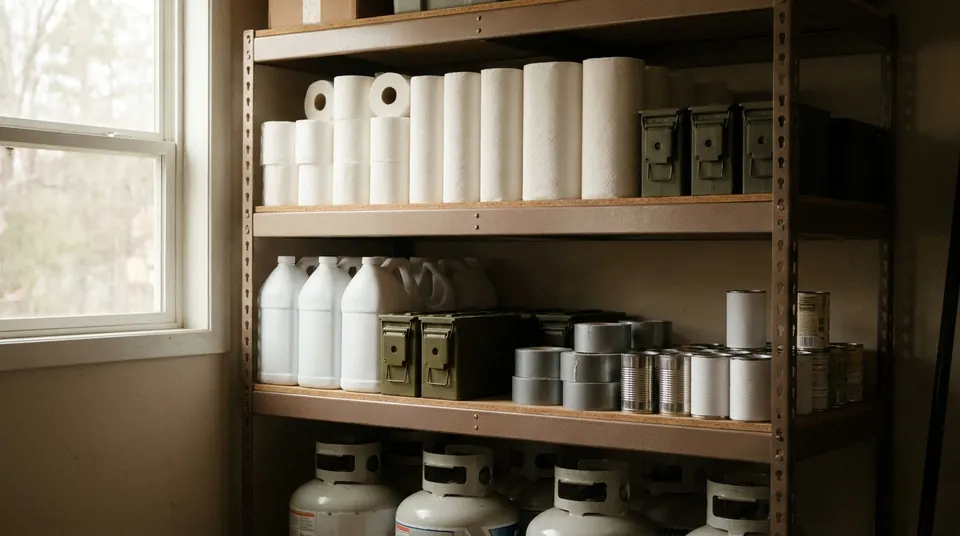
Stockpile water, shelf-stable food you eat, light and batteries, warm bedding, medicines, basic hygiene supplies, simple tools, and some cash in small bills. Aim for 3 days first, then 2 weeks. Quantities are rules of thumb. Rotate everything, and skip anything that spoils fast or is unsafe to store.
- The best stockpile is boring: water, food you eat, light, warmth, medicine, sanitation, tools and cash.
- Ready.gov says one gallon of water per person per day for several days. Build to 2 weeks if you can.
- Bleach weakens with age. Buy it fresh and treat 6-12 months as a rule of thumb.
- Propane cylinders live outdoors, never in the house, garage or basement.
- Skip bulk gasoline, anything that spoils quickly, and anything you will never use.
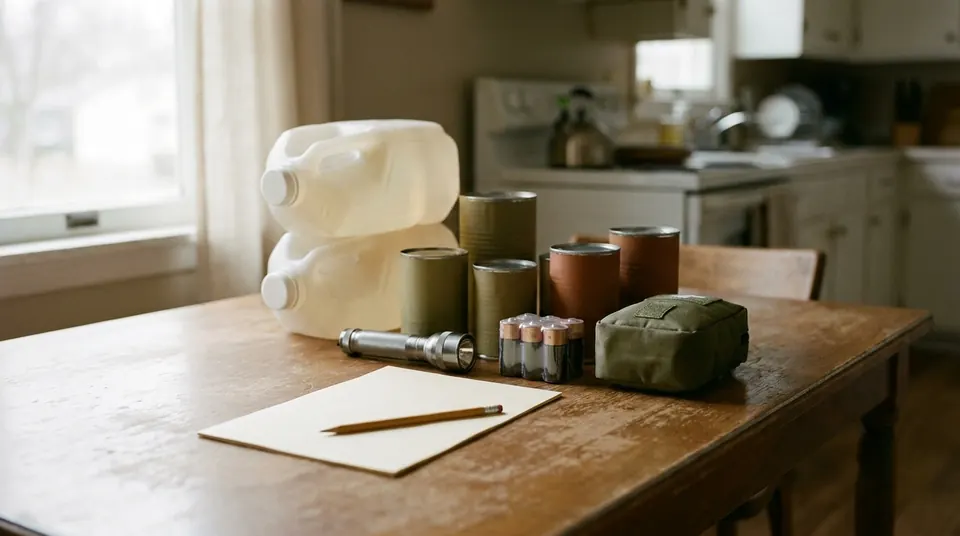
What to stockpile for an emergency is a shorter list than the internet suggests. Most of it is already in a supermarket aisle: water, rice, batteries, trash bags, toilet paper, cash.
The aim is not to hoard. It is to avoid shopping on the worst day, when stores are crowded, shelves are thin or the power is out.
Below are 40 ordinary items in seven groups. Each has a reason and a rough amount. Amounts are planning rules of thumb unless a source is named, so scale them to your household. For the big picture first, read prepping for beginners.
What to stockpile for an emergency: how much is enough
Two stages are enough for most households.
- 3 days. The floor. Ready.gov’s kit page calls for at least several days of food and water.
- 2 weeks. A realistic goal for a home. Some state and local emergency agencies now recommend it.
Do not buy 40 items this weekend. Add a few a week. If you are not sure where to begin, start with water, flashlights and batteries.
Water and hygiene
Sanitation is what goes wrong first in a long outage. A house with no running water gets unpleasant fast.
| # | Item | Why | Rule of thumb |
|---|---|---|---|
| 1 | Drinking water | Everything else depends on it | 1 gallon per person per day, per Ready.gov. Pets too |
| 2 | Plain unscented bleach | Treats questionable water, sanitizes surfaces | 1 or 2 fresh bottles. See shelf life below |
| 3 | Toilet paper | Obvious, until it is not there | About 1 roll per person per week is a common planning figure |
| 4 | Heavy trash bags | Emergency toilet liners, waste, rain gear | 1 box |
| 5 | A 5-gallon bucket with lid | Emergency toilet, water hauling | 1 or 2 |
| 6 | Soap and hand sanitizer | Illness spreads when water is limited | 1 month’s worth |
| 7 | Wipes | Bathing and cleanup when water is short | 2-3 large packs |
| 8 | Menstrual, diaper and incontinence supplies | Not optional, and hard to improvise | 2 weeks plus a spare |
Ready.gov’s kit list includes wipes, garbage bags and zip ties for hygiene. Water you bottle yourself should be replaced every 6 months. Sealed commercial bottles stay in their original container, cool and dark. Our guide to how much water to store has full tables.
Bleach shelf life
Bleach is the item people most often get wrong. It is not a forever product.
Ohio State’s environmental health office reports that Clorox counts a one-year shelf life from the manufacture date, and that heat, sunlight and humidity shorten it (Ohio State EHS). Chemists commonly quote about 6 months to a year before noticeable loss of strength. Treat 6-12 months as a rule of thumb.
Buy fresh bottles, store them in a cool, dark place, and replace them every year. For drinking water, use plain unscented bleach only, and follow the dosing in how to make water safe to drink, not a guess.
Food basics
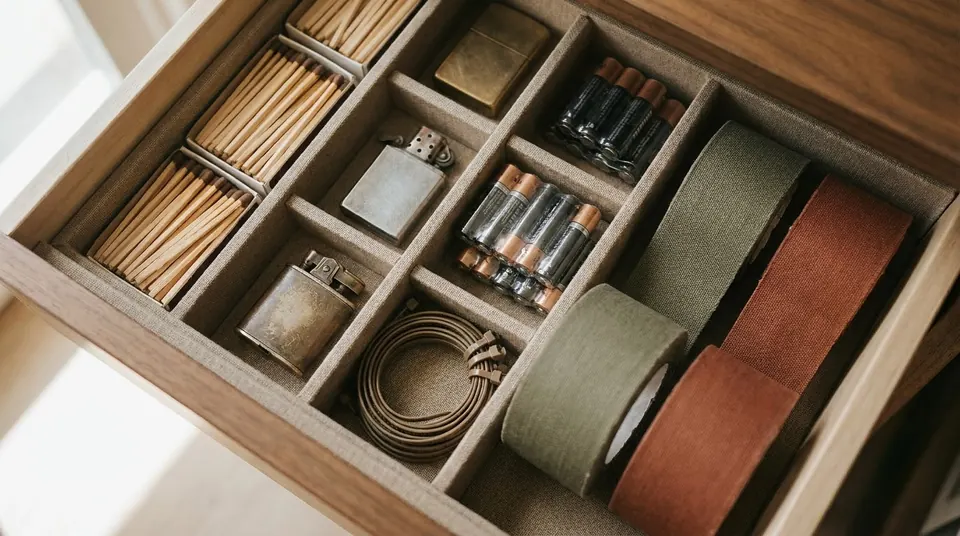
Store what you eat. A pantry you rotate beats a bucket you will never open.
| # | Item | Why | Rule of thumb |
|---|---|---|---|
| 9 | White rice | Cheap calories, long life | 10-25 lb per adult for 2 weeks to a few months |
| 10 | Dried beans and lentils | Protein and fiber | 5-10 lb per adult |
| 11 | Pasta | Fast, filling, familiar | 5-10 lb per adult |
| 12 | Canned protein: tuna, chicken, chili, beans | Eat cold if needed | 14+ cans per adult for 2 weeks |
| 13 | Peanut butter | Fat and protein, no cooking | 2-3 jars per adult |
| 14 | Oats and cereal | Breakfast with minimal prep | 1-2 weeks of servings |
| 15 | Cooking oil, salt, sugar | Flavor and calories | 1 bottle of oil, 2 lb each of salt and sugar |
| 16 | Shelf-stable milk | Coffee, cereal, kids | A few cartons |
| 17 | Coffee or tea | A real morale booster | What you drink in 2 weeks |
| 18 | Pet food | Pets eat too | 2 weeks, plus water |
| 19 | Comfort food: chocolate, crackers, jam | A bad week needs something | A small box |
The numbers above are rough planning figures for an adult over about two weeks to a few months. They are ours, not an official standard. The 2-week emergency food supply list and the emergency supply calculator give a household-sized plan.
For long-term staples, see foods that never expire. For canned options ranked, see best canned foods for emergency storage.
Note: USDA’s food safety service gives a rule of thumb for canned goods: high-acid foods such as tomatoes and fruit keep best quality for 12 to 18 months, and low-acid foods such as meat and vegetables for 2 to 5 years. That is about quality, not a safety cliff. Never eat from cans that are bulging, leaking or deeply dented. Source: USDA FSIS.
Light and power
| # | Item | Why | Rule of thumb |
|---|---|---|---|
| 20 | Flashlights and headlamps | Ready.gov recommends a flashlight for every household member | 1 per person, plus a spare |
| 21 | Batteries | Everything above needs them | 2 sets per device. Store in the original package, away from heat |
| 22 | Power banks | Phones are your radio, map and flashlight | 1 per adult, charged |
| 23 | Battery or hand-crank radio | Alerts when networks are down | 1 |
| 24 | Matches and lighters | Cooking, candles, stoves | 2 lighters, 1 box of matches |
| 25 | Lantern for the table | Wide light beats one narrow beam | 1 or 2 battery lanterns |
Use flashlights, not candles, for light. Candles are a fire risk in a dark house, and that is when people knock them over.
Heat and shelter
For cold-weather detail, see how to stay warm without power.
| # | Item | Why | Rule of thumb |
|---|---|---|---|
| 26 | Sleeping bags or heavy blankets | Warmth does not need electricity | 1 per person |
| 27 | Wool socks, hats, gloves | Bodies lose heat fast without them | 1 spare set per person |
| 28 | Propane cylinders and an outdoor stove | Cooking and boiling water | 2-3 cylinders, used and stored outdoors only |
| 29 | Battery-backup CO alarm | Outages cause CO poisonings | 1 on every level |
| 30 | A small fire extinguisher | Candles, heaters, stoves | 1 near the kitchen |
Safety: Propane cylinders belong outdoors, upright, away from heat and your house. Not in the garage. Not in the basement. Ready.gov says camp stoves and charcoal grills must be used outdoors, away from windows, and gas ovens and stoves must never heat a home. Ready.gov also recommends battery-backup carbon monoxide detectors on every level of the home. See Ready.gov: Power Outages.
Medical
| # | Item | Why | Rule of thumb |
|---|---|---|---|
| 31 | Over-the-counter medicines | Pain, fever, stomach, allergies | Ready.gov lists pain relievers, antacids, anti-diarrheals and laxatives |
| 32 | Prescription refills | Pharmacies close in emergencies | Ask your doctor or pharmacist about a 90-day supply. Rules vary by plan |
| 33 | First aid kit | Bandages, gauze, tape, gloves | 1 for the house, 1 for the car |
| 34 | Thermometer | Know if a fever is real | 1 digital |
| 35 | Spare glasses and contact solution | Breakable, hard to replace | 1 spare pair |
Ready.gov warns that in an emergency it can be difficult to refill a prescription, so organize and protect your medicines now. Store them as the label says. The bathroom is a poor place for pills, because heat and humidity can weaken some of them. Check expiry dates once a year.
If anyone depends on a power-driven medical device, make a plan with their provider. Ask your utility about priority lists.
Tools and repair
| # | Item | Why | Rule of thumb |
|---|---|---|---|
| 36 | Duct tape | Patch, seal, mark | 2 rolls |
| 37 | Contractor bags and a tarp | Cover a broken window or roof | 1 box, 1 tarp |
| 38 | Manual can opener | Ready.gov kit item | 2 |
| 39 | Multi-tool and wrench or pliers | Ready.gov lists a wrench or pliers to shut off utilities | 1 each |
| 40 | Work gloves and sturdy shoes | Cleanup injuries are common | 1 pair per adult |
Paper and cash
Not numbered, because you should just have them.
- Cash in small bills. Card readers and ATMs stop when power or networks fail. Ready.gov lists cash among its additional items without naming an amount. A few days of basics is a sensible start.
- Copies of documents. IDs, insurance, bank records, medical lists. Ready.gov suggests a waterproof, portable container or electronic copies.
- A paper contact list. Phone batteries die.
Shelf life and rotation
A stockpile that sits for five years is a stockpile that expires.
- Put a date on every item with a marker.
- Rotate first in, first out. Buy new, push old forward, eat old.
- Check the whole stockpile twice a year. Ready.gov says to rethink your needs every year.
- Keep canned food cool and dry. Boxed food goes in tightly closed plastic or metal containers, per Ready.gov.
What not to stockpile
- Large amounts of gasoline. Hard to store safely at home and it degrades. Only keep what local rules allow, in approved containers, away from living areas.
- Fresh food that spoils. It is not a stockpile.
- Things you will never use. A pallet of canned beets is a lesson, not a plan.
- Anything you cannot store safely. Propane inside the house, damp grain, chemicals near food.
- Antibiotics from unofficial sources. Ask your doctor.
- Gear without a plan. A tool you do not know how to use is dead weight.
Printable stockpile checklist
Water and hygiene
- Water: 1 gallon per person per day
- Plain unscented bleach, bought this year
- Toilet paper
- Trash bags and a 5-gallon bucket with lid
- Soap, sanitizer, wipes
- Menstrual, diaper or incontinence supplies
Food
- Rice, beans, pasta
- Canned protein and vegetables
- Peanut butter, oats, oil, salt, sugar
- Shelf-stable milk, coffee or tea
- Pet food
- A few comfort foods
Light, heat and tools
- Flashlights, headlamps, batteries
- Power banks and a radio
- Matches and lighters
- Blankets or sleeping bags
- Propane and stove (outdoor storage and use)
- CO alarm and fire extinguisher
- Duct tape, tarp, can opener, multi-tool, gloves
Medical and paper
- OTC medicines
- Prescription refill plan
- First aid kit and thermometer
- Spare glasses
- Cash in small bills
- Document copies and paper contact list
Where to go next
Use our power outage checklist to test the stockpile against a real scenario. Walk through the house with the list. Whatever you cannot find in 60 seconds, you will not find in the dark.
Frequently asked questions
What should I stockpile first?
Water, flashlights, batteries and food you already eat. Those cover the most common emergencies: power cuts, storms and boil-water notices. Ready.gov’s baseline is one gallon of water per person per day for several days, plus a flashlight for every household member. Add medicines and cash next.
What items should I stockpile before a collapse?
The same ones you would need for a bad storm, just in larger amounts: water, shelf-stable food, light, warmth, sanitation, medicines and basic tools. Real shortages have historically looked like supply disruptions, not movie scenes. A deeper pantry and a plan beat exotic gear.
How much food and water should I stockpile?
At least one gallon of water per person per day for several days, per Ready.gov, and some agencies suggest 2 weeks. For food, 3 days is the floor, 2 weeks is a good goal. A family of four needs 56 gallons of water for 2 weeks. Use the supply calculator.
Does bleach expire?
Yes. Clorox counts a one-year shelf life from manufacture, and strength falls with time, faster in heat and sunlight. Treat 6-12 months as a rule of thumb. Buy fresh bottles, store them cool and dark, and replace them yearly. For water treatment, use only plain unscented bleach.
Is it safe to store propane at home?
Store small cylinders outdoors, upright, away from your house and heat sources. Do not keep them in the basement or garage, and never use propane stoves or heaters indoors for heat. Local fire codes may add rules for larger cylinders, so check with your fire department.
Should I stockpile gold or silver?
For a typical household emergency, no. Cash in small bills, fuel for cooking, water and medicines will matter first. Precious metals may suit other financial goals, but they will not boil water or keep a house warm.
Sources
This guide is general information, not professional, medical or legal advice. Follow instructions from local officials during an emergency. Full disclaimer.